
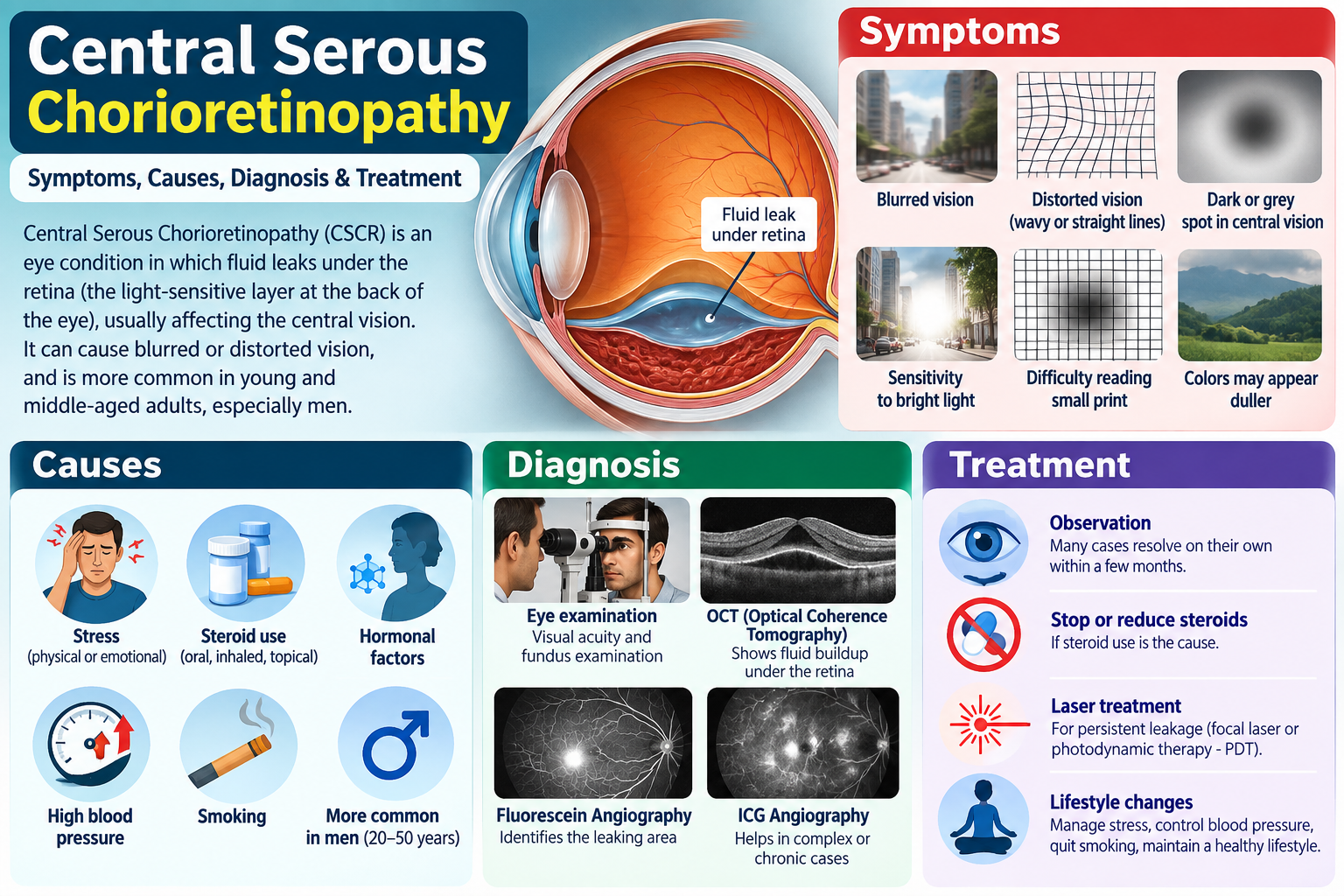
Central Serous Chorioretinopathy (CSCR) is a retinal condition in which fluid accumulates underneath the retina, particularly around the macula
It can affect central vision and may cause objects to appear distorted or different in size.
CSCR is often seen in adults and may be associated with certain risk factors, including corticosteroid exposure and psychological or physical stress.
Symptoms
Patients may notice:
Symptoms
Patients may notice:
- Blurred central vision
- Distorted vision
- A dark or grey spot
- Objects appearing smaller or larger
- Reduced contrast
- Changes in colour perception
Diagnosis
A retina specialist may use:
- Dilated retinal examination
- OCT scan
- Fundus photography
- Fluorescein angiography when required
OCT can show fluid beneath the retina and is useful for monitoring changes.
Treatment
Some cases may resolve with observation and monitoring.
If the condition persists, recurs or significantly affects vision, treatment may be considered based on the retinal findings.
Treatment options may include:
- Observation
- Modification of contributing factors
- Focal laser in selected cases
- Photodynamic therapy in appropriate cases
Patients using corticosteroids should not stop prescribed medication without discussing it with the prescribing doctor.