


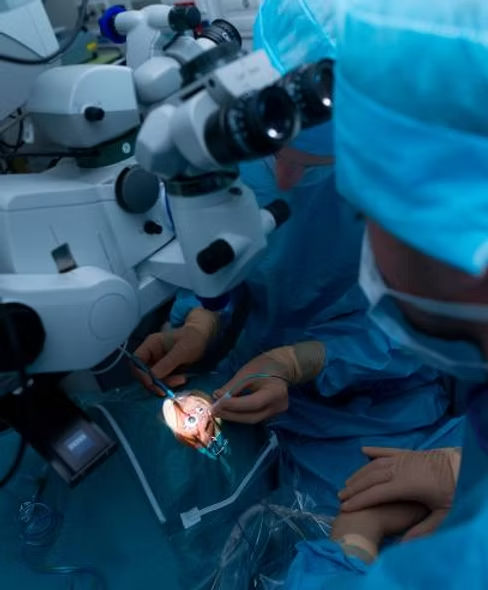
Advanced Anterior Segment Surgeries in Hyderabad
Restoring Vision with Precision & Safety
When vision becomes compromised by corneal disorders or a clouded lens, finding a highly skilled surgical team is your first priority. At Retinova Eye Care Centre in Nallagandla, our board-certified specialists focus entirely on the delicate structures of the front of the eye. Utilizing state-of-the-art diagnostic imaging and modern microsurgical techniques, we ensure highly effective, patient-safe outcomes.
Whether you require a routine evaluation for declining vision or an advanced procedure like stitch-less Cataract Surgery or Pterygium Excision, our facility is equipped to restore your visual clarity while maximizing your comfort.
Understanding Anterior Segment Procedures
Anterior segment surgeries specifically target the front third of the human eye. This vital functional area encompasses the cornea (the clear front window), the conjunctiva, the iris, and the natural crystalline lens.
When diseases or age-related changes affect these structures, patients often experience severely blurred vision, light sensitivity, or chronic redness. Our targeted surgical interventions physically repair or replace these affected tissues, halting the progression of vision loss and restoring a high quality of life.
Core Surgical Treatments We Offer
Expert Pterygium Excision with Grafting
What is Pterygium?
Often referred to as "surfer's eye," a pterygium is a benign, wedge-shaped fleshy growth of conjunctival tissue that aggressively extends across the cornea. While non-cancerous, if left untreated, this tissue can warp the surface of the eye, inducing astigmatism, chronic irritation, and eventually blocking central vision.
Root Causes & Risks
This condition is heavily linked to intense environmental exposure. Individuals who spend significant time outdoors facing harsh ultraviolet (UV) sunlight, chronic dry winds, and heavy dust particles—common in many regions of India—are at an elevated risk of developing these growths.
When is Pterygium Surgery Necessary?
🔹 When the fleshy tissue induces persistent, highly uncomfortable inflammation and a burning sensation.
🔹 When the growth encroaches toward the pupil, directly threatening your line of sight.
🔹 When the visible redness causes severe cosmetic concerns, affecting personal confidence.
The Pterygium Excision Process
We utilize a highly advanced technique to prevent recurrence. After the precise microscopic removal of the abnormal tissue, our surgeons perform an autograft—transplanting a tiny, healthy piece of your own conjunctiva over the exposed area. This modern grafting method drastically reduces the chances of the pterygium growing back and accelerates healing.
Advanced, Suture-less Cataract Surgery
A cataract is the progressive clouding of the eye’s naturally clear lens. As proteins inside the lens break down and clump together, light is obstructed from reaching the retina. This results in dull, faded, or severely blurred vision, making everyday tasks like reading or driving at night increasingly difficult.
Why Do Cataracts Form?
While natural aging is the primary cause, cataracts can be accelerated by chronic health conditions like diabetes, prolonged use of corticosteroid medications, severe eye trauma, and long-term exposure to UV radiation.
Recognizing the Symptoms
Cataracts develop painlessly. Early warning signs include needing brighter light to read, seeing "halos" around streetlights or headlights, increased glare sensitivity, and a noticeable yellowing or fading of colors. Regular clinical evaluations are the only way to track this progression accurately.
Our Precision Treatment Approach
Cataracts cannot be reversed with medication or glasses; surgical removal is the only definitive cure. At Retinova Eye Care, we specialize in Phacoemulsification, the global gold standard for cataract removal.
During this micro-incision procedure, ultrasonic sound waves are used to gently dissolve the clouded lens into microscopic fragments. Once safely removed, a customized, premium artificial Intraocular Lens (IOL) is permanently implanted. Because the incision is incredibly small, it seals itself naturally without the need for stitches, ensuring a highly safe procedure and remarkably fast visual recovery.
Secure Your Consultation Today
Delaying treatment for corneal issues or progressing cataracts can lead to permanent optical damage. Expert diagnosis is the critical first step toward visual clarity.
Schedule a comprehensive evaluation at Retinova Eye Care Centre. Let our highly experienced clinical team guide you through a safe, seamless recovery journey right here in Hyderabad.
Frequently Asked Questions About Anterior Segment Surgeries
Yes. Utilizing FDA-approved technology and performed by our fellowship-trained, board-certified surgeons, these micro-incision procedures are recognized as some of the safest and most successful surgeries in modern medicine.
Because we use advanced stitch-less techniques (like phacoemulsification), the vast majority of our patients notice significant visual improvements within 24 to 48 hours and can return to most light, daily routines almost immediately.
No. These procedures are performed using highly effective localized or topical numbing drops. Patients remain awake and comfortable, experiencing only slight pressure, but absolutely no sharp pain.
If you begin noticing severe nighttime glare, rapid clouding of your vision, increasing difficulty reading, or a painful, growing red spot on the white of your eye, you should book an immediate clinical assessment.