
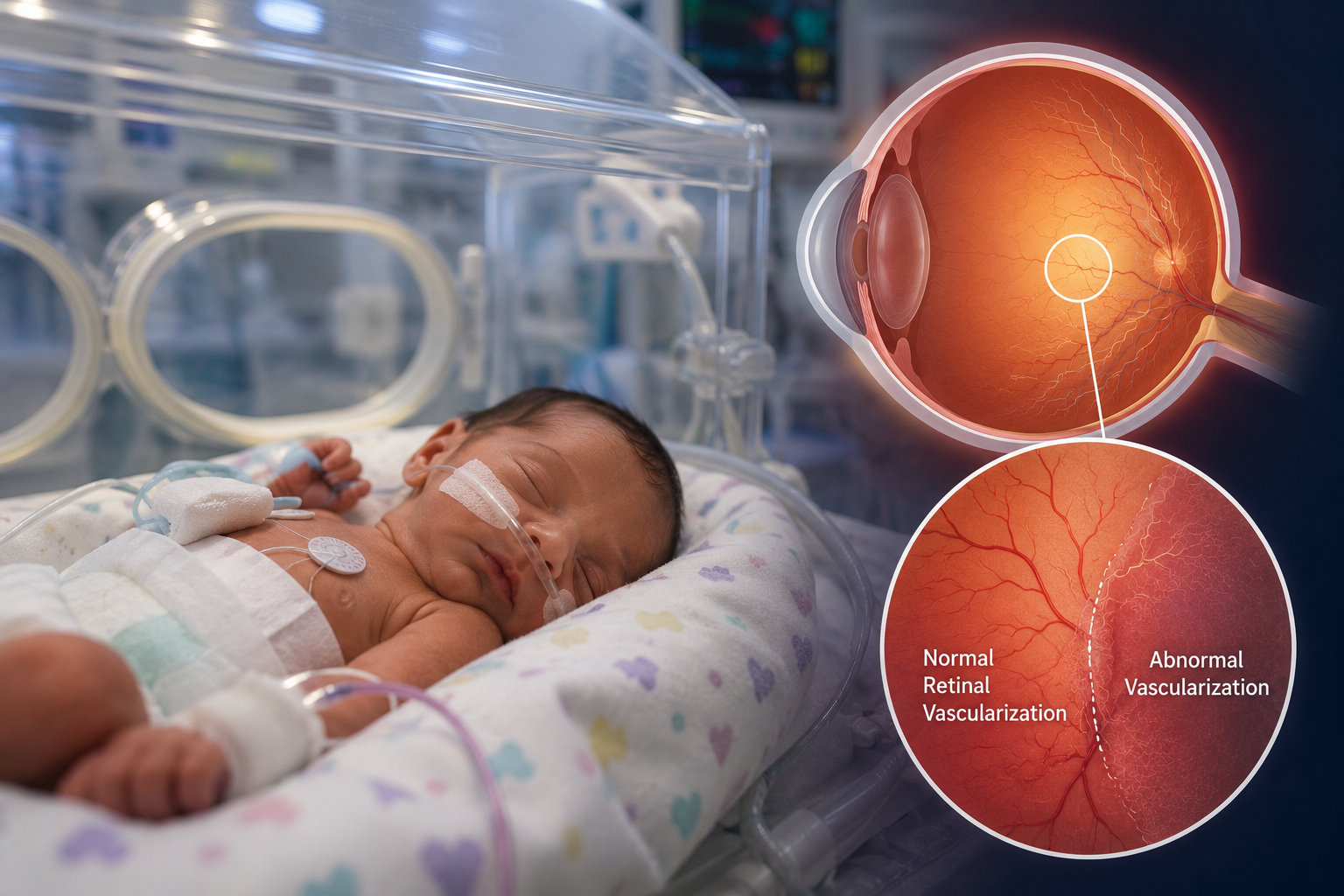
What Is Retinopathy of Prematurity (ROP)? A Parent's Guide
The birth of a premature baby often brings unique health challenges, and one condition that requires special attention is Retinopathy of Prematurity (ROP). ROP is a potentially serious eye disorder that affects premature infants and can lead to vision impairment or even blindness if not diagnosed and treated in time.
The good news is that with timely screening and appropriate treatment, many babies with ROP can have healthy visual outcomes. Understanding this condition can help parents make informed decisions and ensure their child receives the care they need.
In this guide, we'll explain what ROP is, why it occurs, how it is diagnosed, and the treatment options available.
What Is Retinopathy of Prematurity (ROP)?
Retinopathy of Prematurity is an eye condition that affects the retina of premature babies.
The retina is the light-sensitive tissue located at the back of the eye that sends visual information to the brain. In babies born prematurely, the retinal blood vessels may not develop normally. This abnormal blood vessel growth can cause retinal damage and, in severe cases, retinal detachment.
Without timely treatment, ROP can lead to permanent vision loss.
Why Does ROP Occur?
During pregnancy, retinal blood vessels develop gradually and usually complete their growth near the time of full-term birth.
When a baby is born prematurely, this development process may be interrupted. As a result, abnormal blood vessels can grow in the retina, increasing the risk of complications.
The earlier the baby is born, the higher the risk of developing ROP.
Which Babies Are at Risk?
Not every premature baby develops ROP. However, certain factors significantly increase the risk.
Major Risk Factors Include:
Premature birth
Low birth weight
Oxygen therapy after birth
Respiratory complications
Infections in newborns
Multiple births (twins, triplets, etc.)
General medical instability after birth
Babies born before 34 weeks of pregnancy or with very low birth weight are usually considered high-risk and require routine screening.