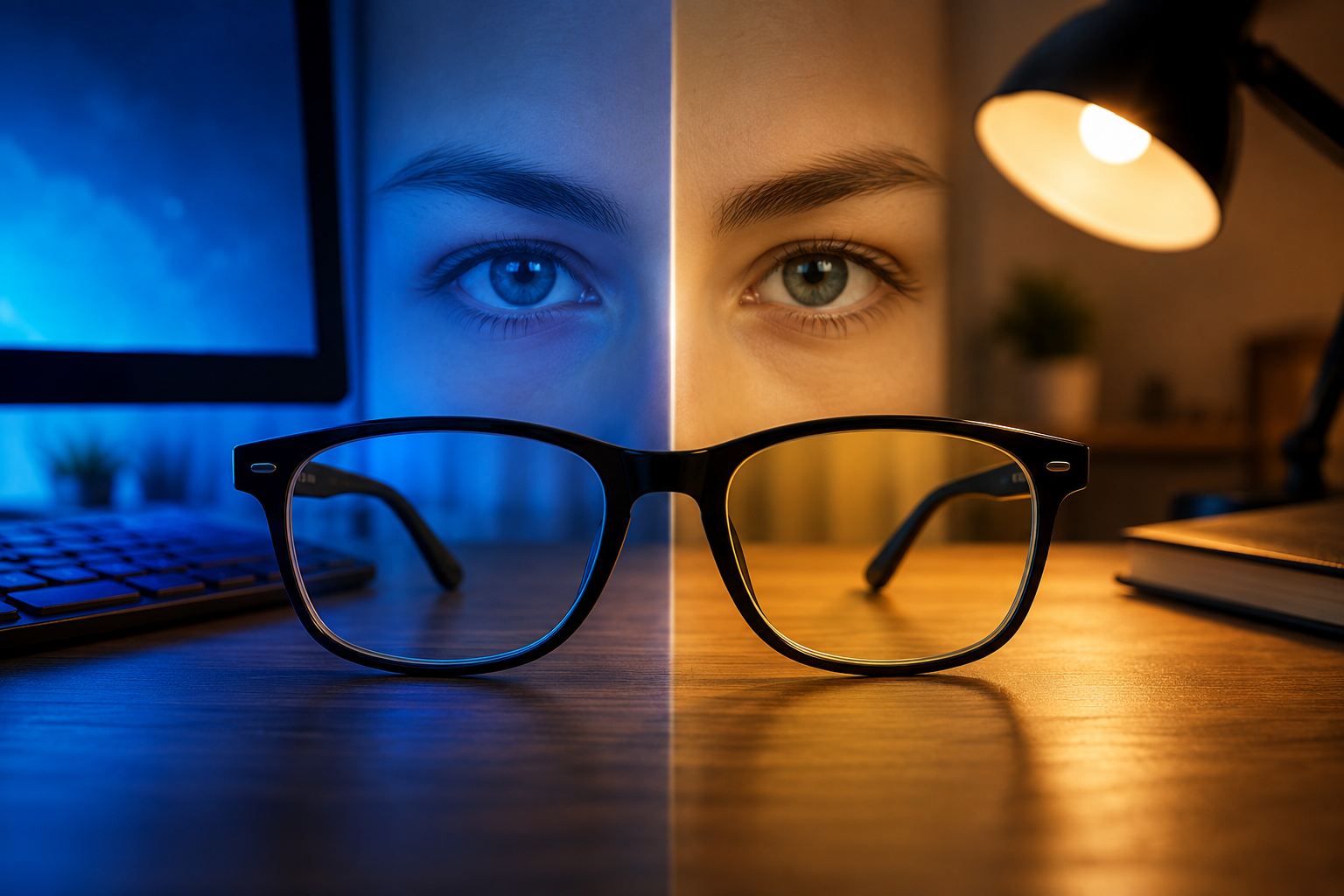
With smartphones, laptops, tablets, and digital screens becoming an essential part of everyday
life, concerns about eye strain and screen-related vision problems have increased significantly.
As a result, blue light glasses have become one of the most popular eye care products in recent
years.
Many advertisements claim that blue light glasses can reduce eye strain, improve sleep quality,
and protect vision from screen damage. But how much of this is backed by science? Are blue
light glasses truly beneficial, or are they simply a marketing trend?
In this article, we'll explore what blue light is, how it affects the eyes, and whether blue light
glasses are genuinely helpful.
What Is Blue Light?
Blue light is a type of visible light with a short wavelength and relatively high energy.
Blue light comes from:
● Sunlight
● Smartphones
● Computer screens
● Tablets
● LED lights
● Television screens
In fact, the sun is the largest source of blue light exposure.
During daytime hours, blue light plays an important role in:
● Maintaining alertness
● Supporting concentration
● Regulating sleep-wake cycles
● Enhancing mood
However, excessive exposure to artificial blue light, particularly at night, has raised concerns
about eye comfort and sleep quality.
Why Are People Concerned About Blue Light?
As screen time has increased dramatically, many people experience symptoms associated with
digital eye strain.
Common complaints include:
● Eye fatigue
● Dry eyes
● Blurred vision
● Headaches
● Difficulty focusing
● Neck and shoulder pain
Because digital screens emit blue light, many assume that blue light is directly responsible for
these symptoms.
However, the relationship is more complex.
What Are Blue Light Glasses?
Blue light glasses are specially designed eyewear that filters or blocks a portion of blue light
emitted by digital devices.
These lenses typically have:
●Clear coatings
● Slight yellow tint
● Blue-light filtering technology
Manufacturers claim that these glasses can:
● Reduce digital eye strain
● Improve visual comfort
● Enhance sleep quality
● Protect retinal health
Let's examine these claims more closely.
Do Blue Light Glasses Reduce Eye Strain?
The Reality
Many people report feeling more comfortable while wearing blue light glasses during prolonged
screen use.
However, research suggests that digital eye strain is often caused by factors such as:
● Reduced blinking
● Poor posture
● Extended screen exposure
● Inadequate lighting
● Uncorrected vision problems
When staring at screens, people blink less frequently, which can lead to dry eyes and
discomfort.
While blue light glasses may improve comfort for some individuals, they are not considered a
complete solution for digital eye strain.
What Helps More?
Eye specialists often recommend:
● Following the 20-20-20 rule
● Taking regular breaks
● Maintaining proper screen distance
● Using artificial tears if necessary
● Ensuring accurate vision correction
These strategies often provide greater benefits than relying solely on blue light glasses.
Can Blue Light Glasses Improve Sleep?
The Evidence
Blue light exposure during the evening can interfere with melatonin production.
Melatonin is a hormone that helps regulate sleep.
Excessive screen use before bedtime may:
● Delay sleep onset
● Reduce sleep quality
● Disrupt natural sleep cycles
Blue light glasses may help reduce nighttime blue light exposure and support healthier sleep
patterns when used in the evening.
However, reducing screen time before bed remains one of the most effective strategies.
Can Blue Light Damage the Retina?
One of the most common concerns is whether blue light from screens can permanently damage
the retina.
Current Understanding
There is currently no strong evidence showing that normal exposure to blue light from digital
screens causes retinal damage in humans.
The amount of blue light emitted by electronic devices is significantly lower than the amount
received from natural sunlight.
Most eye specialists agree that digital devices are not a major cause of retinal injury under
normal usage conditions.
Are Blue Light Glasses Necessary?
The answer depends on individual needs.
You may benefit from blue light glasses if:
● You spend many hours in front of screens
● You experience visual discomfort
● You work late into the evening
● You notice sleep disturbances related to screen use
However, they are not medically required for everyone.
For many individuals, proper screen habits may provide similar benefits.
Common Myths About Blue Light Glasses
Myth 1: Blue Light Glasses Prevent Eye Diseases
There is currently no evidence that blue light glasses prevent conditions such as:
● Cataracts
● Glaucoma
● Macular degeneration
Regular eye examinations remain the most effective way to protect eye health.
Myth 2: They Instantly Eliminate Eye Strain
Eye strain is usually caused by multiple factors, not blue light alone.
Blue light glasses may improve comfort but are not a guaranteed solution.
Myth 3: Everyone Needs Blue Light Glasses
Not everyone experiences symptoms related to prolonged screen use.
The need for blue light glasses varies from person to person.
Tips for Reducing Digital Eye Strain
Whether or not you wear blue light glasses, these habits can help improve visual comfort.
Follow the 20-20-20 Rule
Every 20 minutes:
● Look at an object 20 feet away
● For at least 20 seconds
Blink More Frequently
Blinking helps keep the eyes lubricated and comfortable.
Adjust Screen Brightness
Match screen brightness to the surrounding environment.
Maintain Proper Viewing Distance
Keep screens approximately an arm's length away.
Use Proper Lighting
Avoid glare and excessive screen reflections.
Schedule Regular Eye Examinations
Routine eye exams help identify vision problems that may contribute to digital eye strain.
Who Should Consider Blue Light Glasses?
Blue light glasses may be useful for:
IT Professionals
People working long hours on computers.
Students
Children and young adults who spend significant time using digital devices.
Remote Workers
Professionals working from home with extended screen exposure.
Gamers
individuals who spend several hours daily using screens.
Nighttime Device Users
People who frequently use devices before bedtime.
Frequently Asked Questions
Do blue light glasses really work?
They may improve visual comfort and reduce nighttime blue light exposure, but they are not a
cure for digital eye strain.
Can blue light glasses improve sleep?
Some individuals may experience improved sleep quality when using blue light glasses during
evening screen use.
Are blue light glasses safe?
Yes. Blue light glasses are generally safe and can be worn like regular eyewear.
Can children wear blue light glasses?
Yes, but parents should consult an eye specialist if children experience vision-related
symptoms.
Do I need blue light glasses if I already wear prescription glasses?
Many prescription lenses can include blue-light filtering coatings
if desired.
Key Takeaways
● Blue light is a natural part of visible light and is also emitted by digital screens.
● Blue light glasses may improve comfort during screen use for some individuals.
● They are not proven to prevent eye diseases.
● Proper screen habits remain essential for reducing digital eye strain.
● Regular eye examinations are more important than relying solely on blue light glasses.
Conclusion
Blue light glasses are neither a complete myth nor a miracle solution. While they may help
improve visual comfort and support better sleep habits for some people, they are not a
substitute for healthy screen practices and routine eye care.
If you spend long hours on digital devices and experience symptoms such as eye strain,
headaches, or blurred vision, consulting an eye specialist can help determine the best approach
for maintaining eye comfort and vision health.
Expert Eye Care at Retinova Eye Care Centre
At Retinova Eye Care Centre, Hyderabad, our specialists provide comprehensive eye
examinations and personalized recommendations for digital eye strain, vision correction, and
overall eye health. Whether you're experiencing screen-related discomfort or need a routine eye
check-up, we're here to help protect your vision.