Retinova Eye Care Centre Eye Hospital Logo
Signs Your Child May Need Glasses: A Parent Guide to Healthy Vision

Signs Your Child May Need Glasses: A Parent Guide to Healthy Vision

Good vision plays a critical role in a child's growth, learning, and overall development. From reading and writing to sports and social interactions, children rely heavily on their eyesight every day. However, many vision problems in children often go unnoticed because young children may not realize that their vision is different from what it should be.

As a parent, recognizing the early signs of vision problems can help ensure timely diagnosis and treatment. In many cases, a simple pair of glasses can significantly improve a child's academic performance, confidence, and quality of life.

In this article, we'll discuss the common signs that may indicate your child needs glasses and explain why regular eye examinations are essential for children's eye health.

Why Children's Vision Is Important

Nearly 80% of learning during childhood is visual. If a child struggles to see clearly, it can affect:

● Academic performance

● Reading ability

● Concentration

● Coordination

● Confidence

● Social interactions

Early detection and correction of vision problems can support healthy development and improve learning outcomes.

Common Vision Problems in Children

Children can develop several types of vision issues, including:

Myopia (Nearsightedness)

Difficulty seeing distant objects clearly.

Hyperopia (Farsightedness)

Difficulty focusing on nearby objects.

Astigmatism

Blurred vision due to an irregularly shaped cornea.

Amblyopia (Lazy Eye)

Reduced vision in one eye due to abnormal visual development.

Strabismus (Crossed Eyes)

Misalignment of the eyes that may affect depth perception and visual development.

Regular eye examinations help identify these conditions early.

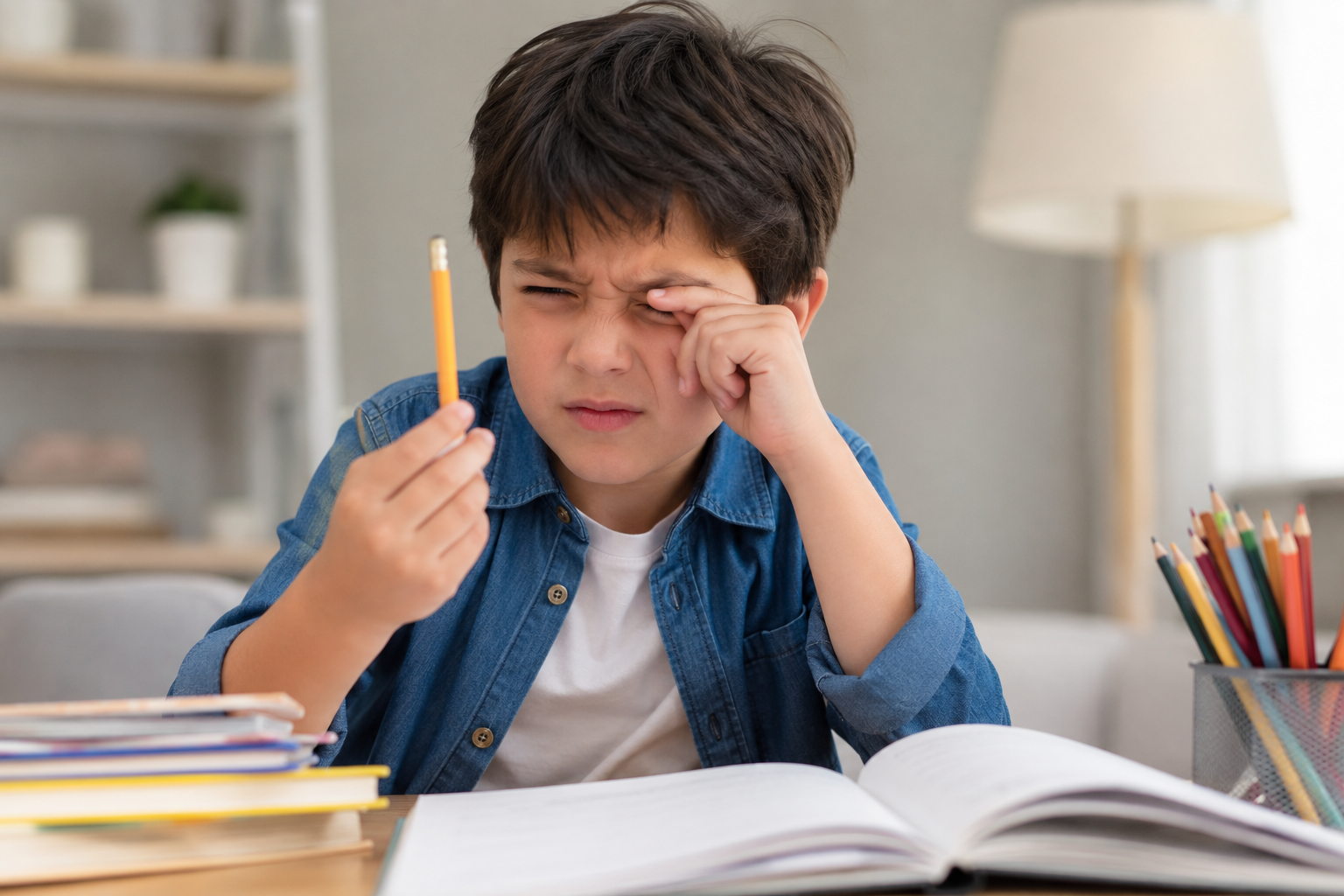
1. Frequent Squinting

One of the most common signs that a child may need glasses is squinting.

Children often squint to:

● Improve focus
● Reduce blurriness
● See distant objects more clearly

If you frequently notice your child narrowing their eyes while watching television or looking at distant objects, an eye examination may be necessary.

2. Sitting Too Close to Screens or Television

Children with vision difficulties often move closer to objects to see them more clearly.

Warning signs include:

● Sitting very close to the TV
● Holding tablets or phones too close
● Leaning excessively toward books

These behaviors may indicate nearsightedness or other refractive errors.

3. Frequent Eye Rubbing

Occasional eye rubbing is normal, especially when a child is tired.

However, persistent eye rubbing may indicate:

● Eye strain
● Vision problems
● Allergies
● Eye fatigue

If eye rubbing occurs regularly, an eye examination is recommended.

4. Complaints of Headaches

Uncorrected vision problems can force the eyes to work harder to focus.

This may result in:

● Frequent headaches
● Forehead pain
● Discomfort after reading or screen use

Children may not always connect headaches to vision problems, making professional evaluation important.

5. Difficulty Reading

Vision problems can affect reading performance and academic success.

Signs include:

● Losing their place while reading
● Skipping lines
● Difficulty recognizing words
● Avoiding reading activities

Parents and teachers may sometimes mistake vision problems for learning difficulties.

6. Poor Academic Performance

A child struggling to see the classroom board or educational materials may experience academic challenges.

Possible signs include:

● Reduced classroom participation
● Declining grade
● Difficulty concentrating

A comprehensive eye examination should be considered if vision concerns are suspected.

7. Covering One Eye

Some children cover one eye while reading or focusing on objects.

This behavior may indicate:

● Double vision
● Eye muscle imbalance
● Strabismus
● Focusing difficulties

Professional assessment can identify the underlying cause.

8. Sensitivity to Light

Excessive sensitivity to light may indicate certain vision problems or eye conditions.

Symptoms may include:

● Frequent blinking outdoors
● Avoiding bright environments
● Complaints of discomfort in sunlight

An eye specialist can evaluate whether further testing is required.

9. Difficulty Following Moving Objects

Children should be able to comfortably track moving objects with both eyes.

Problems may include:

● Losing track of moving objects
● Poor hand-eye coordination
● Difficulty catching balls during sports

Vision issues may sometimes affect coordination and athletic performance.

10. One Eye Turning Inward or Outward

Misalignment of the eyes should always be evaluated by an eye specialist.

This may indicate:

● Strabismus
● Lazy eye
● Eye muscle disorders

Early treatment often provides the best outcomes.


Eye Exams for Children: When Should They Be Scheduled?


Routine eye examinations are important even if no symptoms are present.

Recommended Schedule

● First eye assessment: Around 6 months of age
● Preschool eye examination: Between ages 3 and 5
● School-age children: Every 1 to 2 years

Children with existing vision problems may require more frequent monitoring.


The Impact of Uncorrected Vision Problems


If left untreated, vision issues can affect:

Learning

Difficulty seeing educational materials can hinder academic performance.

Social Development

Children may become less confident when they struggle with activities requiring clear vision.

Sports and Physical Activities

Vision problems can affect balance, coordination, and performance.

Long-Term Eye Health

Certain conditions, such as amblyopia, are easier to treat when detected early.

How Are Vision Problems Diagnosed?


A pediatric eye examination may include:

● Visual acuity testing
● Eye alignment evaluation
● Refraction testing
● Eye health assessment
● Retinal examination if necessary

These tests help determine whether corrective lenses or additional treatment is required.


Treatment Options


Depending on the diagnosis, treatment may include:

Prescription Glasses

The most common solution for refractive errors.

Vision Therapy

Used in certain cases to improve eye coordination and focusing abilities.

Eye Patching

May be recommended for amblyopia (lazy eye).

Monitoring and Follow-Up

Regular eye examinations ensure that treatment remains effective.

Tips for Supporting Healthy Vision in Children


Parents can encourage healthy visual development by:

● Limiting excessive screen time
● Encouraging outdoor activities
● Providing balanced nutrition
● Scheduling regular eye examinations
● Ensuring proper lighting during reading

Healthy habits support both eye health and overall well-being.

Frequently Asked Questions

At what age can a child wear glasses?

Children can wear glasses at almost any age if prescribed by an eye specialist.

Can vision problems affect school performance?

Yes. Poor vision can impact reading, concentration, and classroom participation.

How often should children have eye examinations?

Most children should have an eye examination every one to two years.

Can children outgrow vision problems?

Some conditions may improve over time, while others require ongoing management.

Is squinting always a sign of poor vision?

Not always, but frequent squinting should be evaluated by an eye specialist.

Key Takeaways

● Vision problems in children are common and often go unnoticed.

● Frequent squinting, headaches, and reading difficulties may indicate the need for glasses.

● Early diagnosis supports healthy visual and academic development.

● Routine eye examinations are essential even when symptoms are absent.

● Timely treatment can significantly improve a child's quality of life.

Conclusion

Clear vision is essential for a child's success both inside and outside the classroom. Recognizing the signs of vision problems and seeking timely eye care can make a lasting difference in your child's development and confidence.

If you notice any of the warning signs discussed in this article, scheduling a comprehensive eye examination is the best way to ensure your child's eyes are healthy and developing properly.

Pediatric Eye Care at Retinova Eye Care Centre

At Retinova Eye Care Centre, Hyderabad, our experienced eye specialists provide comprehensive pediatric eye examinations and vision care services. We are committed to helping children achieve healthy vision through early detection, accurate diagnosis, and personalized treatment plans.