
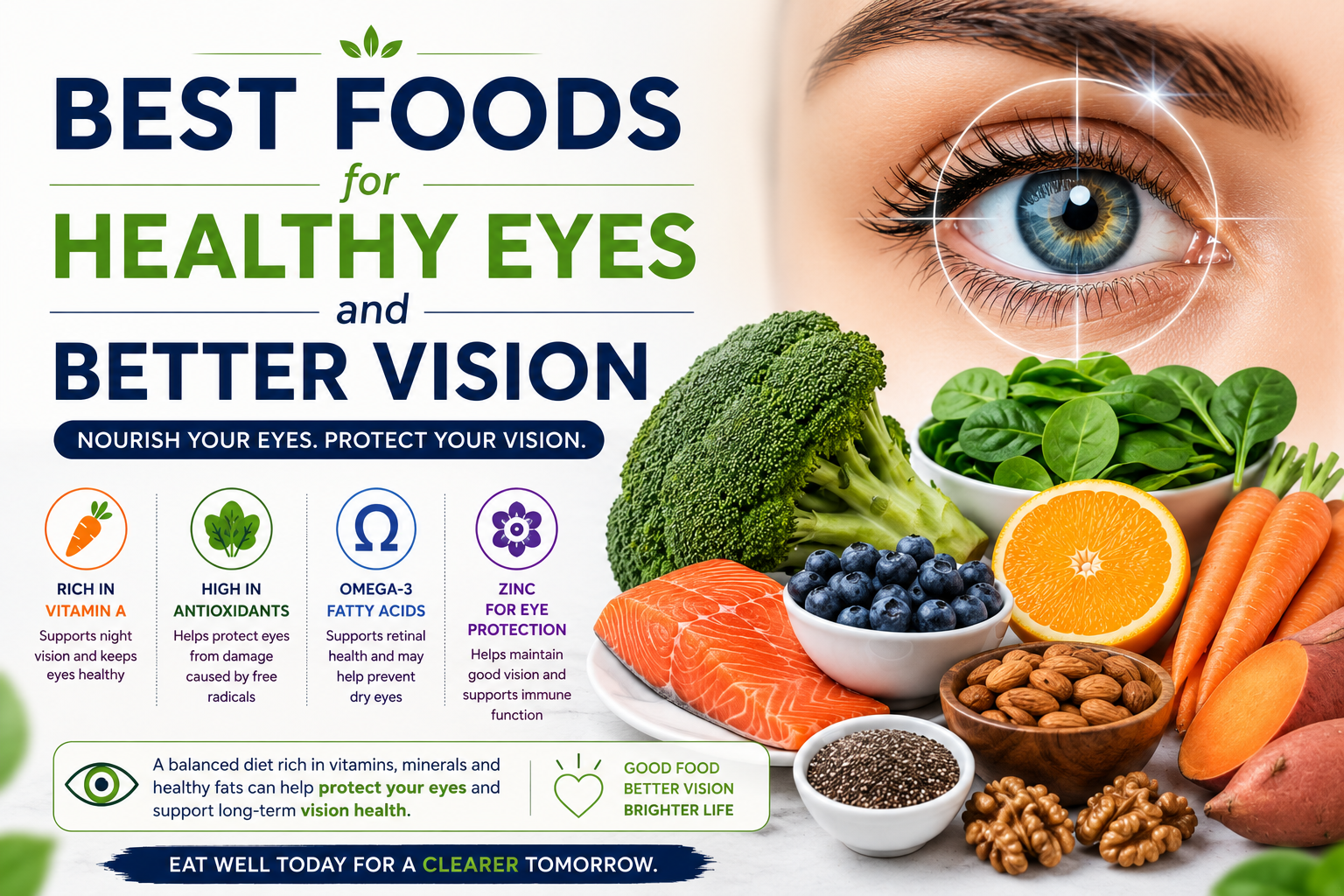
Maintaining good vision involves more than regular eye examinations and corrective lenses. The food you eat plays a significant role in supporting eye health and reducing the risk of vision-related problems. Just as your heart and brain require proper nutrition, your eyes depend on essential vitamins, minerals, and antioxidants to function optimally.
Modern lifestyles, increased screen time, pollution, and aging can place additional stress on the eyes. Fortunately, adopting a nutrient-rich diet can help protect your vision and support long-term eye health.
In this guide, we'll explore the best foods for healthy eyes, the nutrients that support vision, and practical dietary tips to keep your eyes functioning at their best.
Why Nutrition Matters for Eye Health
The eyes are highly active organs that require a constant supply of nutrients. Certain vitamins and antioxidants help protect delicate eye tissues from damage caused by aging, environmental factors, and oxidative stress.
A healthy diet can help:
● Support clear vision
● Reduce the risk of age-related eye diseases
● Protect retinal health
● Improve tear production
● Support night vision
● Maintain healthy blood vessels in the eyes
Poor nutrition may increase the risk of various eye conditions, including cataracts, age-related macular degeneration, and dry eye syndrome.
Essential Nutrients for Healthy Eyes
Before discussing specific foods, it's important to understand the nutrients that contribute to good eye health.
Vitamin A
Vitamin A supports retinal function and helps maintain healthy vision, particularly in low-light conditions.
Benefits:
● Supports night vision
● Protects the cornea
● Prevents dry eyes
Vitamin C
Vitamin C is a powerful antioxidant that helps protect eye tissues from oxidative damage.
Benefits:
● Supports blood vessel health
● May reduce cataract risk
● Supports collagen production
Vitamin E
Vitamin E helps protect eye cells from free radical damage.
Benefits:
● Supports retinal health
● Helps reduce age-related eye damage
Omega-3 Fatty Acids
Omega-3 fatty acids play an important role in retinal development and tear production.
Benefits:
● Supports retinal function
● Reduces dry eye symptoms
● Promotes overall eye comfort
Lutein and Zeaxanthin
These antioxidants are concentrated in the retina and help filter harmful blue light.
Benefits:
● Protect the macula
● Reduce oxidative stress
● Support long-term vision health
Zinc
Zinc helps transport vitamin A from the liver to the retina.
Benefits:
● Supports night vision
● Supports retinal health
1. Leafy Green Vegetables
Leafy greens are among the most beneficial foods for eye health.
Examples:
● Spinach
● Kale
● Collard greens
● Fenugreek leaves
These vegetables are rich in lutein and zeaxanthin, which help protect the retina and maculafrom damage.
Adding leafy greens to your daily diet can help reduce the risk of age-related vision problems.
2. Carrots
Carrots are often associated with good vision for a reason.
They are rich in:
● Beta-carotene
● Vitamin A
● Antioxidants
Vitamin A helps maintain healthy retinal function and supports night vision.
While carrots alone won't improve eyesight dramatically, they are an excellent addition to a balanced eye-healthy diet.
3. Fatty Fish
Fatty fish are one of the best sources of omega-3 fatty acids.
Examples:
● Salmon
● Sardines
● Tuna
● Mackerel
Omega-3s help:
● Support retinal health
● Reduce dry eye symptoms
● Promote healthy visual function
People who spend long hours in air-conditioned environments or in front of screens may particularly benefit from omega-3-rich foods.
4. Citrus Fruits
Citrus fruits provide an excellent source of vitamin C.
Examples:
● Oranges
● Lemons
● Sweet lime
● Grapefruit
Vitamin C supports healthy blood vessels in the eyes and may help reduce the risk of cataracts.
Including fresh fruits in your daily diet can contribute significantly to overall eye health.
5. Eggs
Eggs contain several nutrients beneficial for vision.
These include:
● Lutein
● Zeaxanthin
● Zinc
● Vitamin A
The combination of these nutrients makes eggs one of the most effective foods for maintaining healthy eyesight.
6. Nuts and Seeds
Nuts and seeds are rich in vitamin E and healthy fats.
Examples:
● Almonds
● Walnuts
● Sunflower seeds
● Flaxseeds
Vitamin E helps protect eye cells from age-related damage and oxidative stress.
A small daily serving can provide significant nutritional benefits.
7. Sweet Potatoes
Sweet potatoes are rich in beta-carotene and vitamin A.
Benefits include:
● Improved night vision
● Corneal protection
● Antioxidant support
They offer many of the same benefits as carrots while providing additional fiber and nutrients.
8. Bell Peppers
Bell peppers are rich in vitamin C and antioxidants.
Benefits:
● Supports eye blood vessels
● Protects eye tissues
● Supports collagen formation
Red, yellow, and orange peppers provide the highest antioxidant content.
9. Berries
Berries are loaded with antioxidants that help combat oxidative stress.
Examples:
● Blueberries
● Strawberries
● Blackberries
Benefits:
● Support retinal health
● Reduce inflammation
● Promote healthy blood circulation
Including berries in your diet may help support long-term eye function.
10. Legumes and Beans
Beans provide valuable nutrients that contribute to eye health.
Examples:
● Kidney beans
● Lentils
● Chickpeas
Benefits:
● Rich in zinc
● Support retinal function
● Promote healthy vision
These are especially useful for individuals following vegetarian diets.
Foods to Limit for Better Eye Health
While many foods support vision, others may negatively impact eye health when consumed excessively.
Try to limit:
● Sugary beverages
● Highly processed foods
● Excessive fried foods
● Refined carbohydrates
● Excessive
● Excessive salt intake
These foods may contribute to diabetes, hypertension, and inflammation, which can indirectly affect vision.