
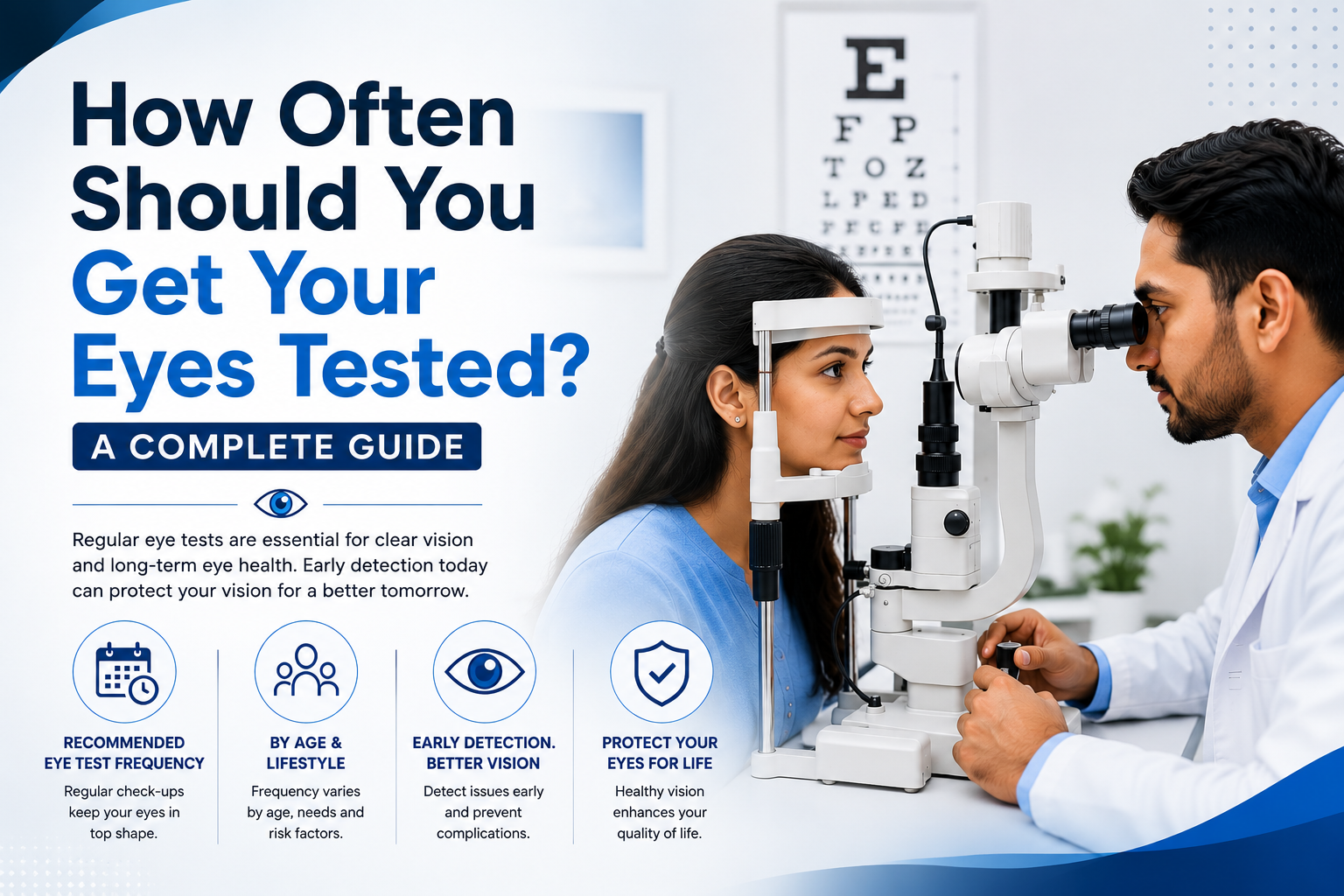
Many people only visit an eye doctor when they notice vision problems. However, regular eye examinations are essential not only for maintaining clear vision but also for detecting serious eye diseases before symptoms appear. Conditions such as glaucoma, diabetic retinopathy, cataracts, and age-related macular degeneration can develop gradually and may not cause noticeable symptoms in their early stages.
Whether you wear glasses, use contact lenses, or have perfect vision, routine eye examinations are an important part of your overall healthcare. Understanding how often you should get your eyes tested can help protect your eyesight and ensure early detection of potential eye problems.
In this guide, we'll explain the recommended eye examination schedule for different age groups, discuss risk factors that may require more frequent check-ups, and highlight the importance of preventive eye care.
Why Regular Eye Tests Are Important
Your eyes can reveal more than just vision problems. During a comprehensive eye examination, an eye specialist can identify early signs of various health conditions, including:
● Diabetes
● High blood pressure
● Glaucoma
● Cataracts
● Retinal diseases
● Macular degeneration
Regular eye tests help:
● Detect eye diseases early
● Update vision prescriptions
● Prevent vision loss
● Monitor chronic health conditions
● Improve overall eye health
Many serious eye conditions progress silently, making routine eye examinations essential even if your vision appears normal.
How Often Should Adults Get Their Eyes Tested?
The frequency of eye examinations depends on several factors, including age, health conditions, family history, and existing eye problems.
Adults Aged 18 to 39 Years
Healthy adults with no vision problems should generally have an eye examination every 2 years.
However, more frequent visits may be necessary if you:
● Wear glasses or contact lenses
● Have diabetes
● Have a family history of glaucoma
● Experience vision changes
● Spend extended hours using digital devices
Regular screenings can identify developing issues before they become serious.
Adults Aged 40 to 60 Years
Around the age of 40, many individuals begin experiencing age-related vision changes, particularly presbyopia, which affects near vision.
Eye specialists typically recommend:
● Comprehensive eye examination every 1 to 2 years
This age group also faces an increased risk of:
● Glaucoma
● Cataracts
● Retinal disorders
Routine monitoring becomes increasingly important during these years.
Adults Over 60 Years
Individuals aged 60 and above should generally undergo a comprehensive eye examination every year.
The risk of developing serious eye diseases increases significantly with age, including:
● Cataracts
● Age-related macular degeneration
● Glaucoma
● Diabetic retinopathy
Annual examinations allow for early diagnosis and timely treatment.
Eye Examination Schedule for Children
Children's vision plays a critical role in learning and development. Undiagnosed vision problems can affect academic performance, confidence, and overall development.
Recommended Eye Testing Schedule for Children
● First eye assessment: Around 6 months of age
● Preschool examination: Between 3 and 5 years
● School-age children: Every 1 to 2 years
Parents should also schedule an eye examination if they notice signs such as:
● Frequent eye rubbing
● Squinting
● Sitting too close to screens
● Difficulty reading
● Poor concentration in school
Early detection can significantly improve treatment outcomes.
How Often Should People with Diabetes Get Their Eyes Tested?
Diabetes is one of the leading causes of vision loss worldwide. High blood sugar levels can damage the blood vessels in the retina, leading to diabetic retinopathy.
Individuals with diabetes should:
● Undergo a comprehensive dilated eye examination at least once every year
More frequent visits may be required if retinal changes are detected.
Early diagnosis and treatment can prevent severe vision complications.
People Who May Need More Frequent Eye Exams
Certain individuals have a higher risk of developing eye conditions and should consult their eye specialist regarding a customized examination schedule.
You May Need More Frequent Eye Tests If You:
● Have diabetes
● Have high blood pressure
● Have a family history of glaucoma
● Wear contact lenses
● Have previously undergone eye surgery
● Take medications that affect vision
● Have retinal diseases
● Experience recurring eye symptoms
Your eye doctor can recommend the most appropriate schedule based on your individual needs.
Signs You Should Schedule an Eye Test Immediately
Even if your next routine appointment is months away, certain symptoms should prompt immediate evaluation.
Seek Eye Care If You Experience:
● Sudden blurred vision
● Eye pain
● Flashes of light
● Sudden increase in floaters
● Double vision
● Persistent redness
● Frequent headaches
● Difficulty seeing at night
● Sudden vision loss
Ignoring these symptoms could delay diagnosis of serious eye conditions.
What Happens During a Comprehensive Eye Examination?
Many patients avoid eye exams because they are unsure what to expect. Fortunately, modern eye examinations are safe, painless, and highly informative.
A comprehensive eye examination may include:
Vision Assessment
Measures how clearly you can see at various distances.
Refraction Test
Determines whether you need glasses or contact lenses.
Eye Pressure Measurement
Screens for glaucoma by measuring intraocular pressure.
Retinal Examination
Allows the doctor to examine the retina, optic nerve, and blood vessels.
Slit Lamp Examination
Provides a detailed view of the eye's structures, including the cornea and lens.
Additional Diagnostic Tests
Depending on your symptoms and risk factors, advanced imaging tests may also be recommended.